.png)
.png)

Brake Warning Light On? What It Means and When You Should Stop Driving
- avancezassistltd
- Jun 17
- 5 min read
Your Brake Warning Light Has Come On – Should You Keep Driving?
Few dashboard warning lights are as serious as the brake warning light. While some warning lights simply indicate that your vehicle needs attention soon, the brake warning light can mean your vehicle's ability to stop safely has been compromised.
Ignoring it could put you, your passengers, and other road users at risk.
In this guide, we'll explain what the brake warning light means, the most common causes, what you should check, and when you should stop driving immediately.
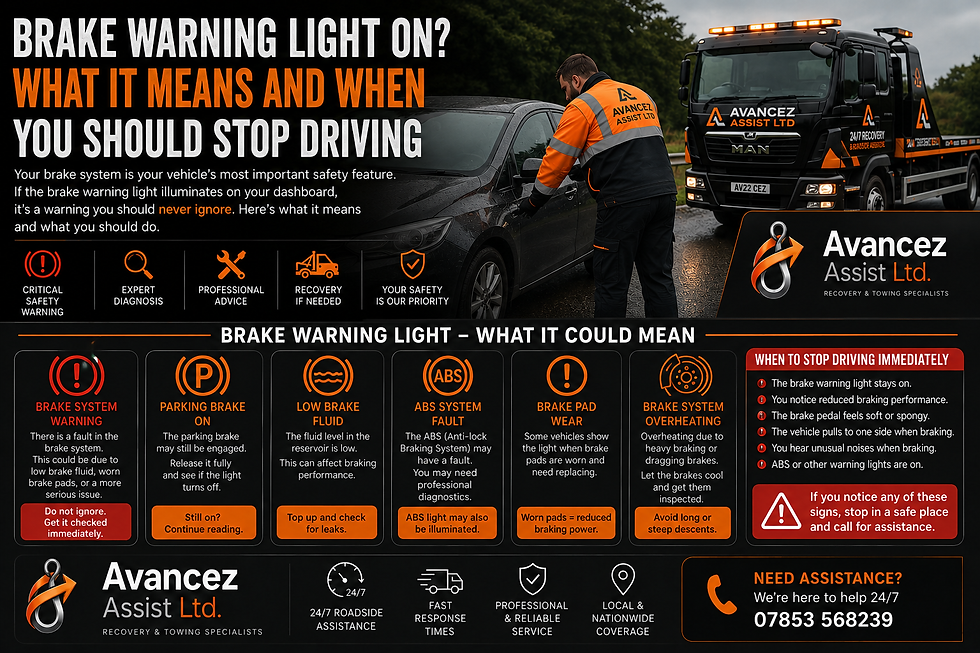
What Does the Brake Warning Light Look Like?
The brake warning light is usually displayed as:
A red circle with an exclamation mark (!)
A red circle containing the letter "P"
The word BRAKE illuminated in red
Depending on your vehicle manufacturer, the symbol may vary slightly, but a red brake warning light should always be treated seriously.
The Most Common Causes
1. The Handbrake Is Still Applied
The simplest explanation is often the correct one.
Many vehicles illuminate the brake warning light whenever the handbrake or electronic parking brake is engaged.
Before assuming something is wrong:
Check the handbrake is fully released.
Ensure an electronic parking brake has disengaged correctly.
If the warning remains illuminated, investigate further.
2. Low Brake Fluid
One of the most common causes is low brake fluid.
Brake fluid transfers the force from your foot on the brake pedal to the braking system. Without enough fluid, braking performance can be severely reduced.
Low fluid may be caused by:
Worn brake pads
A brake fluid leak
Previous maintenance without correct topping up
Never ignore a low brake fluid warning.
3. Worn Brake Pads
As brake pads wear down, brake fluid levels naturally drop slightly.
Many modern vehicles include brake pad wear sensors which trigger a dashboard warning.
Signs include:
Squealing brakes
Grinding noises
Longer stopping distances
Brake warning light
Replacing brake pads early can prevent damage to expensive brake discs.
4. Brake Fluid Leak
A leak anywhere within the hydraulic braking system is a serious safety issue.
Leaks may occur from:
Brake pipes
Flexible brake hoses
Brake callipers
Master cylinder
Wheel cylinders (drum brakes)
Symptoms include:
Brake fluid underneath the vehicle
Soft or spongy brake pedal
Brake pedal travelling further than normal
Reduced braking performance
This requires immediate attention.
5. ABS or Electronic Brake System Fault
Some vehicles illuminate the brake warning light alongside the ABS warning light.
Possible causes include:
Faulty wheel speed sensor
ABS pump failure
Electronic stability control fault
Brake pressure sensor issue
Although standard braking may still operate, important safety systems could be disabled.
Professional diagnosis is recommended as soon as possible.
What Should You Do If the Brake Warning Light Comes On While Driving?
If the light appears unexpectedly:
Stay Calm
Avoid harsh braking or sudden steering movements.
Test the Brakes Carefully
If it is safe to do so:
Gently press the brake pedal.
Check whether the pedal feels normal.
Notice whether the vehicle stops evenly.
If anything feels unusual, stop driving immediately.
Pull Over Safely
Find a safe location away from traffic.
Avoid stopping:
On bends
On blind summits
In live motorway lanes
Check These Things First
If it is safe:
✓ Is the handbrake fully released?
✓ Is the brake fluid below the minimum mark?
✓ Can you see any obvious leaks?
✓ Is the brake pedal firm?
✓ Are there unusual noises?
Do not continue driving if you're unsure.
When You Should Stop Driving Immediately
You should not continue driving if:
The brake pedal feels soft or spongy.
The pedal sinks towards the floor.
Braking distance has increased.
The vehicle pulls to one side when braking.
You hear grinding metal noises.
Brake fluid is leaking.
Multiple brake warning lights are illuminated.
The red brake warning light remains on after checking the handbrake.
Driving with faulty brakes is extremely dangerous.
Can You Drive With the Brake Warning Light On?
Sometimes the cause is minor, such as the parking brake not fully releasing.
However, because the warning light may indicate a failure within the braking system, you should never assume it is safe to continue driving.
If you have any doubt, arrange professional assistance rather than risking a serious accident.
How to Prevent Brake Problems
Routine maintenance is the best defence against brake-related breakdowns.
Have your brakes inspected regularly and pay attention to any changes in performance. Brake fluid should be replaced at the intervals recommended by your vehicle manufacturer, and worn brake pads or discs should be changed before they become unsafe.
Listen for unusual noises, avoid ignoring dashboard warnings, and have any braking issues checked by a qualified technician as soon as possible.
How Avancez Assist Can Help
At Avancez Assist, we understand how worrying it can be when a serious warning light appears during your journey.
If you're unsure whether it's safe to continue driving, our team can help with:
24/7 Vehicle Recovery
Roadside Assistance
Breakdown Recovery
Vehicle Transport
Home Recovery
Long-Distance Vehicle Transport
Accident Recovery
If your brakes are unsafe, we'll recover your vehicle safely, helping you avoid the risk of further damage or an accident.
Final Thoughts
A brake warning light should never be ignored. While the cause may be something simple, such as the parking brake being partially engaged, it can also indicate a serious fault affecting your vehicle's ability to stop safely.
If the warning light comes on while driving, reduce your speed, find a safe place to stop, and assess the situation carefully. If you're in any doubt about the condition of your brakes, don't take chances—arrange professional assistance.
When it comes to braking systems, it's always better to be cautious than to risk your safety.
Frequently Asked Questions
Is it safe to drive with the brake warning light on?
Not unless you've confirmed the cause is minor, such as the parking brake not being fully released. If the light remains on or your brakes feel different, stop driving and seek assistance.
Can low brake fluid cause the warning light to come on?
Yes. Low brake fluid is one of the most common reasons for the brake warning light to illuminate and should be investigated promptly.
What's the difference between the ABS light and the brake warning light?
The ABS warning light usually indicates a fault with the anti-lock braking system, while the red brake warning light often signals a more serious issue with the primary braking system or low brake fluid.
Why is my brake warning light on but the car still stops normally?
Some faults, such as low brake fluid or worn brake pads, may trigger the warning before braking performance noticeably changes. However, the issue can worsen quickly, so it should still be checked without delay.

Comments